Lighting
Furniture Integrated Lighting
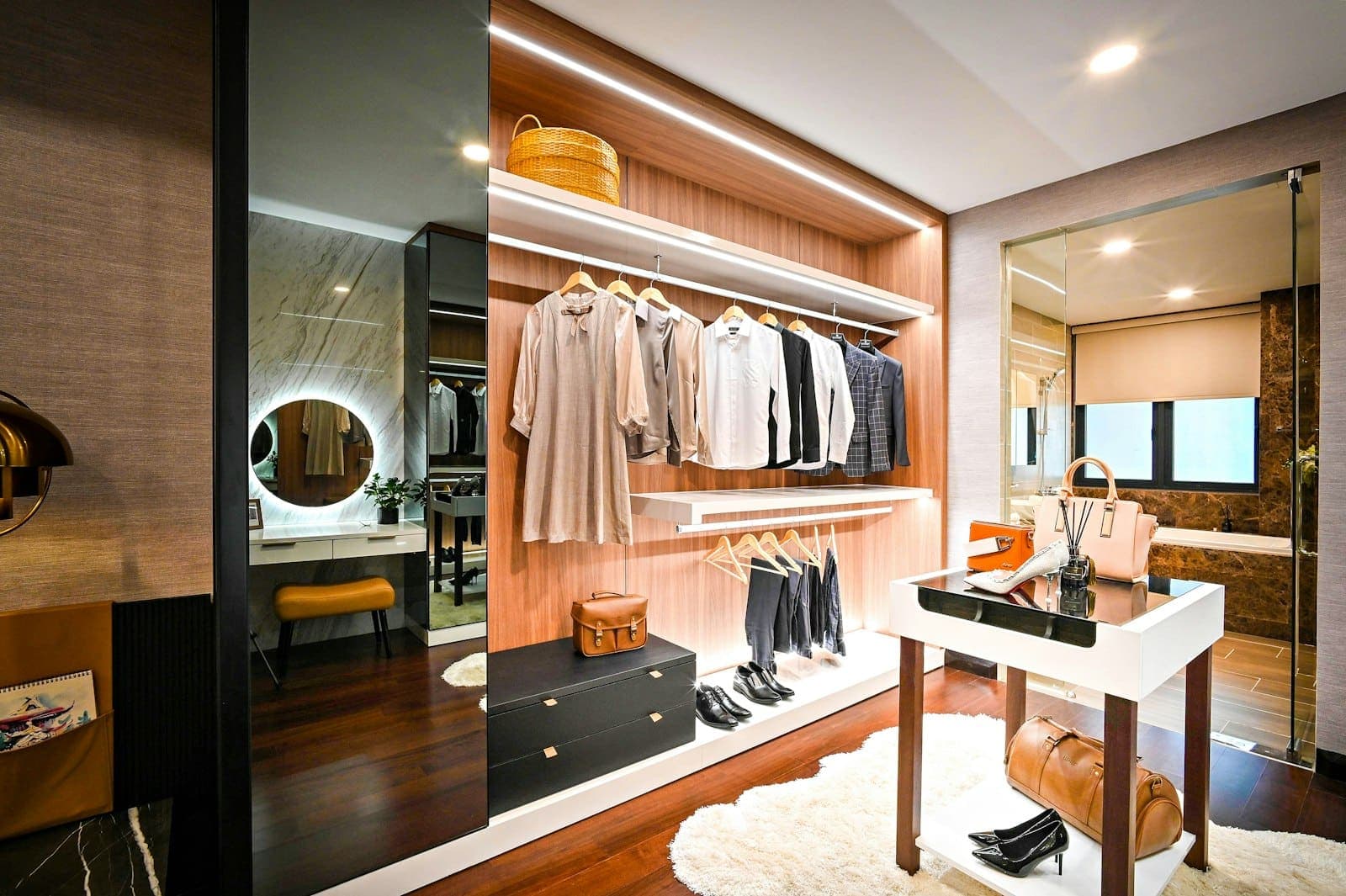
Furniture integrated lighting is light designed into the joinery itself: LED profiles recessed into wardrobe shelves, under kitchen wall cabinets, behind a headboard, along a floating TV unit or around a vanity mirror. The light source stays hidden inside the furniture, so you see a clean glow on the surfaces rather than a fixture.
What it is
Furniture Integrated Lighting, in plain language
Because it has to be built in, it needs planning with your carpenter or interior designer before the furniture is made: grooves routed for the profiles, space for drivers, cable paths through the panels and the right switch or sensor for each piece.
Where to use it
- Wardrobes and walk-in closetsLights that come on as the door opens and show the true colours of clothes.
- KitchensUnder-cabinet task light on the counter and a soft glow inside glass shutters.
- Beds and headboardsA warm backlight for reading and a dim night light under the bed.
- TV units, shelves and display nichesBacklighting and shelf lights that make objects and texture stand out.
- Vanities and mirrorsEven, shadow-free light on the face.
Benefits
Why it is worth it
No visible fixtures
Recessed profiles with diffusers give a continuous line with no dots.
Light where you use it
Inside the wardrobe, on the counter, at the bedside, not just from the ceiling.
Automatic and efficient
Door and motion sensors switch lights on only when needed.
Part of the room scenes
Furniture lights can dim with the rest of the room or join automation scenes.
Options & specs
How to choose
- Profiles and diffusers
- Recessed, surface and corner aluminium profiles with opal or clear covers.
- Switching
- Door sensors, touch and hand-wave switches, motion sensors or automation keypads.
- Colour temperature
- Warm 2700K for bedrooms and living, 4000K for kitchens and wardrobes, or tunable white.
- Drivers
- Dimmable low-voltage drivers placed where they can be reached for service.
See it
Want to see furniture integrated lighting we have installed?
Message us and we will share photos and videos of recent projects near you.
Our process
From first visit to years of support
- 01
Listen & Design
We review the furniture drawings with your interior designer or carpenter.
- 02
Develop
We mark profile grooves, driver spaces, cable paths and sensor positions for each unit.
- 03
Integrate & Install
We fit the profiles, drivers and sensors as the furniture is installed and set each light level.
- 04
Operate (AMC)
AMC covers driver and strip replacement and adjustment of sensors and scenes.
Brands we use
Products we supply and integrate
- Topmet
- Lumvel
- Digitech
FAQ
Furniture Integrated Lighting questions
When should furniture lighting be planned?
Before the carpentry is made. Grooves, cable holes and driver spaces are simple to build in at the workshop and hard to add later.
Will I see the LED dots?
Not with the right profile and diffuser. We use high-density strips set back inside opal covers for a continuous line of light.
Can wardrobe lights turn on automatically?
Yes. Door sensors or motion sensors switch the light on when the shutter opens and off when it closes.
Can you add lighting to existing furniture?
Often, yes, using surface or corner profiles. We check each piece on site and suggest the neatest way to run cables.
Start a conversation
Interested in furniture integrated lighting?
Send us a photo or a floor plan on WhatsApp — we will suggest options and arrange a site visit.